Kryon Berlin Tour & Seminar - Berlin, Germany, Sept 17-22 2019 (Kryon Channelling by Lee Carroll)

Kryon Berlin Tour & Seminar - Berlin, Germany, Sept 17-22 2019 (Kryon Channelling by Lee Carroll)
30th Anniversary of the Fall of the Berlin Wall

Council of Europe (CoE) - European Human Rights Court - founding fathers (1949)

Council of Europe (CoE) - European Human Rights Court - founding fathers (1949)
French National Assembly head Edouard Herriot and British Foreign minister Ernest Bevin surrounded by Italian, Luxembourg and other delegates at the first meeting of Council of Europe's Consultative Assembly in Strasbourg, August 1949 (AFP Photo)

EU founding fathers signed 'blank' Treaty of Rome (1957)

EU founding fathers signed 'blank' Treaty of Rome (1957)
The Treaty of Rome was signed in the Palazzo dei Conservatori, one of the Renaissance palaces that line the Michelangelo-designed Capitoline Square in the Italian capital

Shuttered: EU ditches summit 'family photo'

Shuttered: EU ditches summit 'family photo'
EU leaders pose for a family photo during the European Summit at the EU headquarters in Brussels on June 28, 2016 (AFP Photo/JOHN THYS)

European Political Community

European Political Community
Given a rather unclear agenda, the family photo looked set to become a highlight of the meeting bringing together EU leaders alongside those of Armenia, Azerbaijan, Britain, Kosovo, Switzerland and Turkey © Ludovic MARIN

Merkel says fall of Wall proves 'dreams can come true'


“ … Here is another one. A change in what Human nature will allow for government. "Careful, Kryon, don't talk about politics. You'll get in trouble." I won't get in trouble. I'm going to tell you to watch for leadership that cares about you. "You mean politics is going to change?" It already has. It's beginning. Watch for it. You're going to see a total phase-out of old energy dictatorships eventually. The potential is that you're going to see that before 2013. They're going to fall over, you know, because the energy of the population will not sustain an old energy leader ..."
"Update on Current Events" – Jul 23, 2011 (Kryon channelled by Lee Carroll) - (Subjects: The Humanization of God, Gaia, Shift of Human Consciousness, 2012, Benevolent Design, Financial Institutes (Recession, System to Change ...), Water Cycle (Heat up, Mini Ice Ace, Oceans, Fish, Earthquakes ..), Nuclear Power Revealed, Geothermal Power, Hydro Power, Drinking Water from Seawater, No need for Oil as Much, Middle East in Peace, Persia/Iran Uprising, Muhammad, Israel, DNA, Two Dictators to fall soon, Africa, China, (Old) Souls, Species to go, Whales to Humans, Global Unity,..... etc.)
(Subjects: Who/What is Kryon ?, Egypt Uprising, Iran/Persia Uprising, Peace in Middle East without Israel actively involved, Muhammad, "Conceptual" Youth Revolution, "Conceptual" Managed Business, Internet, Social Media, News Media, Google, Bankers, Global Unity,..... etc.)

"Demystifying the future" + "Physics in the next 500 years"(#) - May 16-17, 2014 (Kryon Channelling by Lee Carroll) - (#) (This channel will become a historical channel in the future, prove that Kryon is a real communication from the Creative Source/God to Humanity - "Our Family") - (Text version "Physics in the next 500 years")

1 To see and measure multi-dimensional/quantum physics, instrument (super-cooling quantum plasma lens)

2 Two more laws of multi-dimensional physics revealed: explanation of dark matter & acknowledgement of free energy (controlling mass)

3 God in the atom. God has - provable - part in physics. Intelligent/benevolent design. (Will bring religion and science together)

4 Human Consciousness is an attribute of physics. (Pleiadians - Humans ancestors / Humans free choice only planet in the Milky Way Galaxy. Other galaxies have their own spiritual systems and physics)

5 Coherent DNA. Multidimensional DNA coherent between dimensions will give Enhanced DNA


"The Recalibration of Awareness – Apr 20/21, 2012 (Kryon channeled by Lee Carroll) (Subjects: Old Energy, Recalibration Lectures, God / Creator, Religions/Spiritual systems (Catholic Church, Priests/Nun’s, Worship, John Paul Pope, Women in the Church otherwise church will go, Current Pope won’t do it), Middle East, Jews, Governments will change (Internet, Media, Democracies, Dictators, North Korea, Nations voted at once), Integrity (Businesses, Tobacco Companies, Bankers/ Financial Institutes, Pharmaceutical company to collapse), Illuminati (Started in Greece, with Shipping, Financial markets, Stock markets, Pharmaceutical money (fund to build Africa, to develop)), Shift of Human Consciousness, (Old) Souls, Women, Masters to/already come back, Global Unity.... etc.) - (Text version)

“… The Shift in Human Nature

You're starting to see integrity change. Awareness recalibrates integrity, and the Human Being who would sit there and take advantage of another Human Being in an old energy would never do it in a new energy. The reason? It will become intuitive, so this is a shift in Human Nature as well, for in the past you have assumed that people take advantage of people first and integrity comes later. That's just ordinary Human nature.

In the past, Human nature expressed within governments worked like this: If you were stronger than the other one, you simply conquered them. If you were strong, it was an invitation to conquer. If you were weak, it was an invitation to be conquered. No one even thought about it. It was the way of things. The bigger you could have your armies, the better they would do when you sent them out to conquer. That's not how you think today. Did you notice?

Any country that thinks this way today will not survive, for humanity has discovered that the world goes far better by putting things together instead of tearing them apart. The new energy puts the weak and strong together in ways that make sense and that have integrity. Take a look at what happened to some of the businesses in this great land (USA). Up to 30 years ago, when you started realizing some of them didn't have integrity, you eliminated them. What happened to the tobacco companies when you realized they were knowingly addicting your children? Today, they still sell their products to less-aware countries, but that will also change.

What did you do a few years ago when you realized that your bankers were actually selling you homes that they knew you couldn't pay for later? They were walking away, smiling greedily, not thinking about the heartbreak that was to follow when a life's dream would be lost. Dear American, you are in a recession. However, this is like when you prune a tree and cut back the branches. When the tree grows back, you've got control and the branches will grow bigger and stronger than they were before, without the greed factor. Then, if you don't like the way it grows back, you'll prune it again! I tell you this because awareness is now in control of big money. It's right before your eyes, what you're doing. But fear often rules. …”

Thursday, June 26, 2014

Civil partnerships can be converted to marriages from December

Married transgender people will also be able to change legal gender without ending marriage, provided partner agrees

theguardian.com, Rowena Mason, political correspondent,  Thursday 26 June 2014

Same-sex couples can convert their civil partnerships into marriages by attending
 a registry office and signing a declaration that they wish to be married in front of
a registrar. Photograph: Jupiterimages/Getty Images/Comstock Images

Same-sex couples will be able to convert their civil partnerships to marriages from December this year, the culture secretary has said.

Sajid Javid added that married transgender people will be able to change their legal gender without ending their marriage, provided their partner agrees.

He made the announcements after a consultation on what should happen to civil partnerships now same-sex couples have been allowed to marry since March.

It concluded that civil partnerships will continue to be available to gay couples but will remain barred for opposite-sex couples.

To convert a civil partnership into marriage, a couple will have to attend a registry office and sign a declaration that they wish to be married in front of a registrar.

Writing for PinkNews, Javid, who is also an equalities minister, said the change would take place from 10 December.

"This is something that many, many people have been clamouring for since the first equal marriages took place in March, and the final preparations are well underway.

"You don't have to have a big party to celebrate with all your friends and family, but I certainly won't try and stop you if you do."

Peter Tatchell, the equal rights campaigner, said it was great that same-sex couples in civil partnerships will be able to convert. But he accused David Cameron of "betraying the principle of equality" by refusing to allow opposite-sex couples to have a civil partnership.

"Same-sex couples now have a legal advantage over straight couples. They have two options: civil marriage and civil partnership. In contrast, opposite-sex couples have only one option: marriage. This is unjust and unfair," he said.

"The government's decision to retain civil partnerships is welcome. Not everyone wants to get married, given that marriage has a long sexist and homophobic history. It is right that all couples should have a choice."

Related Articles:

Germany to allow third gender option at birth


"The Akashic Circle" – Jul 17, 2011 (Kryon channelled by Lee Carroll) - (Subjects: Religion, The Humanization of God, Benevolent Design, DNA, Akashic Circle, (Old) Souls, Gaia, Indigenous People, Talents, Reincarnation, Genders, Gender Switches, In “between” Gender Change, Gender Confusion, Shift of Human Consciousness, Global Unity,..... etc.)  - (Text version)

“… Gender Switching

Old souls, let me tell you something. If you are old enough, and many of you are, you have been everything. Do you hear me? All of you. You have been both genders. All of you have been what I will call between genders, and that means that all of you have had gender switches. Do you know what happens when it's time for you to switch a gender? We have discussed it before. You'll have dozens of lifetimes as the same gender. You're used to it. It's comfortable. You cannot conceive of being anything else, yet now it's time to change. It takes approximately three lifetimes for you to get used to it, and in those three lifetimes, you will have what I call "gender confusion."

It isn't confusion at all. It's absolutely normal, yet society often will see it as abnormal. I'm sitting here telling you you've all been through it. All of you. That's what old souls do. It's part of the system. …”

Spain's new king visits sensitive Catalonia region

Yahoo – AFP, Daniel Bosque, 26 June 2014

Spain's King Felipe VI reviews troops and Guardia Civil during a military
 ceremony at the Palacio de Oriente or Royal Palace in Madrid on June 25,
2014 (AFP Photo/Dani Pozo)

Girona (Spain) (AFP) - Just a week into his reign, Spain's King Felipe VI visits one of the country's most politically sensitive regions Thursday: Catalonia, where an independence drive has raised tensions with Madrid.

Catalan leaders' plan for a referendum on independence from Spain has put them at odds with the national government, which insists such a move is illegal.

Now some are looking to Felipe to help ease the row.

Supporters of an independant state of
 Catalonia and Republicans display a
huge Catalan flag as they celebrate the
 abdication of Spanish king Juan Carlos in
 central Barcelona on June 2, 2014 (AFP
Photo/Quique Garcia)
"All the new king can do to facilitate dialogue, especially given the intransigence of the national government, will be positive," said the Catalonia regional government's vice-president Joana Ortega.

"But I insist we have to look for a solution where one should be found, in the political sphere."

The king, who speaks good Catalan, heads along with his glamorous ex-newsreader wife Queen Letizia to one of the region's most independence-minded towns, Girona, to preside at a royal prize-giving.

Given the hostility of the pro-independence movement to the national institutions, it is seen as a trial of fire for Felipe, who was sworn in as successor to his father Juan Carlos on June 19.

As crown prince, Felipe's titles included Prince of Girona, after which Thursdays prizes are named. Now he is king, the title has passed onto his eight-year-old daughter and heir, Leonor.

But the town hall recently approved a motion declaring that Girona dissociated itself from the princely title.

Unity, diversity

Proud of their distinct language and culture, a growing number of Catalonia's 7.5 million citizens resent the redistribution of their taxes to other parts of Spain and believe the region would be better off on its own.

Felipe is due to coincide at a dinner after Thursday's prizes with Catalonia's president Artur Mas, leader of the current autonomy drive, but no formal meeting is scheduled between them.

Mas did not applaud Felipe's investiture speech, in which the king defended the "unity of Spain" as well as its diversity.

President of Catalonia's regional
 government Artur Mas gives a press
conference at the Palau de la Generalitat,
 in Barcelona, following the abdication of
 Spain's king Juan Carlos on June 2, 2014
 (AFP Photo/Quique Garcia)
Mas has said he will "wait and see" how things go with the new king. He maintains his call for an independence referendum on November 9, which the government has branded illegal.

Analysts have hailed Felipe as a breath of fresh air after recent scandals for the Spanish monarchy, but they caution that in Spain's parliamentary democracy the king's political powers are limited.

A Spanish judge ruled Wednesday that King Felipe's sister, Princess Cristina, and her husband should face fraud charges, opening the way to an unprecedented criminal trial.

"The king does not govern, he reigns," said political scientist Joan Botella.

"He can contribute to changing people's state of mind. That is probably what a large part of the Catalan and Spanish public is hoping. We will see if he manages to do it."

Related Articles:


Wednesday, June 25, 2014

US to extend privacy protection rights to EU citizens

EU and human rights and privacy groups welcome pledge, which follows pressure in wake of Snowden revelations

theguardian.com, Ewen MacAskill, defence and security correspondent, Wednesday 25 June 2014

Eric Holder, the US attorney general. Photograph: Gary Cameron/Reuters

The Obama administration has caved in to pressure from the European Union in the wake of Edward Snowden's revelations on surveillance by promising to pass legislation granting European citizens many of the privacy protection rights enjoyed by US citizens.

The proposed law would apply to data on European citizens being transferred to the US for what Washington says is law enforcement purposes.

After the first Snowden revelations appeared in June last year, the Obama administration irritated many by insisting that while US citizens were protected by law from snooping by US spy agencies, this did not apply to non-Americans.

On Wednesday the US attorney general, Eric Holder, promised at a US-EU meeting of home affairs and justice ministers in Athens that legislation would be sent to Congress to extend the US Privacy Act to EU citizens.

The EU, as well as human rights and privacy groups, welcomed Holder's announcement but coupled it with expressions of scepticism, describing it as a vague promise.

Viviane Reding, the EU justice commissioner, said it was an important step in the right direction but added: "Words only matter if put into law. We are waiting for the legislative step."

Human rights groups said the US Privacy Act, in spite of being touted as a beacon for the rest of the world, had a relatively weak regulatory framework. They said Holder's pledge did not address many of the other issues raised by mass surveillance worldwide by the NSA and its partners, including Britain's GCHQ.

Speaking after the Athens meeting, the EU home affairs commissioner, Cecilia Malmstrom, said: "EU-US relations have been strained lately in the aftermath of the Snowden revelations but we have worked very hard to restore trust."

Holder said: "The Obama administration is committed to seeking legislation that would ensure that … EU citizens would have the same right to seek judicial redress for intentional or wilful disclosures of protected information and for refusal to grant access or to rectify any errors in that information, as would a US citizen under the Privacy Act.

"This commitment, which has long been sought by the EU, reflects our resolve to move forward not only on the data protection and privacy agreement but on strengthening transatlantic ties."

The US and the EU have been negotiating for three years over personal data protection, but the discussions took on a new immediacy with the Snowden revelations.

Emotions have been strongest in Germany, given the history of mass surveillance by the Stasi, and this was compounded when it was revealed that the US had been snooping on Angela Merkel. The German government has pressed Obama, Holder and other members of the US administration to set out how they would curb spying on non-Americans.

Over the last year Obama has made repeated overtures to Merkel and other EU leaders only to be rebuffed. European governments, as well as the European parliament, has called for concrete action rather than just soft words. Even a speech in January in which Obama said he had asked Holder and the intelligence community to develop safeguards for foreign citizens met with scepticism.

Holder said the data protection agreement under discussion related to personal data shared with the US by European countries for law enforcement purposes. He framed it in the context of transnational crime and terrorism, in particular fighters travelling to and from Syria.

"One consistent theme ran through all our discussions: in a world of globalised crime and terrorism, we can protect our citizens only if we work together," Holder said. "At the same time, we must ensure that we continue our long tradition of protecting privacy in the law enforcement context."

Gus Hosein, executive director of Privacy International, said: "It is a good step forward. Nonetheless, there are three massive impediments to achieving equivalent protection under law. First, Congress needs to act on this and we haven't seen many positive steps on protecting non-Americans' rights."

Secondly, Hosein described the US Privacy Act as "an unfortunately weak legal regime" and, thirdly, he wanted worldwide privacy protections against what he said was the accumulation of massive amounts of data by US intelligence against non-Americans.

Cynthia Wong, senior internet researcher at Human Rights Watch, said: "It may be a small step in the right direction but much more needs to be done to address data protection in the US and to rein in the sheer scale of what the NSA is collecting."

The Netherlands will back Juncker for president, says prime minister

DutchNews.nl, Wednesday 25 June 2014

Rutte will show its support for Juncker
appear at the EU summit. (NOS/ANP)
The Netherlands supports the candidacy of former Luxemburg premier Jean-Claude Juncker for the presidency of the European Union, prime minister Mark Rutte said on Wednesday.

Rutte told parliament he would vote in favour of Juncker at the European summit which starts tomorrow, if it goes to a vote.

Britain’s prime minister David Cameron plans to make a ‘principled case’ against Juncker at the summit and plans to force a vote on his appointment to highlight Britain's opposition.

Biggest party

Juncker is the candidate of the EPP, the main centre-right group in the European parliament, which emerged with the largest number of MEPs in last month's European elections.

Meanwhile, Nos television reports that Jeroen Dijsselbloem, Dutch finance minister and head of the influential Euro group, has admitted apologising to Juncker after calling him an inveterate smoker and drinker in a television broadcast in January.

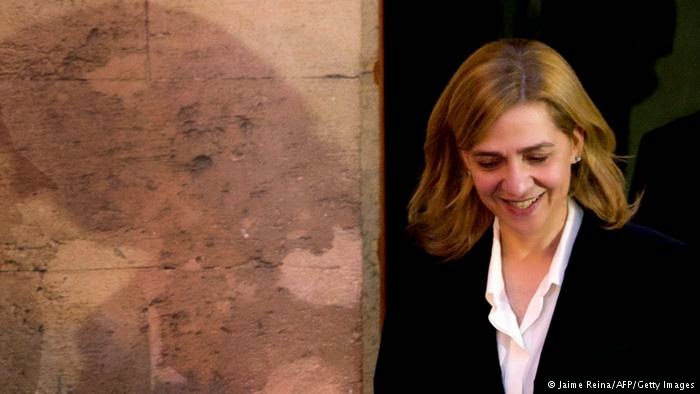
Judge opens way to trial against Spain's Princess Cristina

A judge has formalized charges against Princess Cristina of Spain, the sister of the newly-crowned King Felipe VI. The charges relate to a tax fraud and money laundering case implicating the princess' husband.

Deutsche Welle, 25 June 2014


The Spanish judge upheld corruption charges against Cristina de Borbon and her husband at the Palma de Mallorca court on Wednesday.

The rulings come less than a week after Felipe took the Spanish throne, promising an "honest and transparent" monarchy, following the abdication of 76-year-old King Juan Carlos.

In a blow to the royal family, investigative magistrate Jose Castro ruled that Cristina would remain a suspect in the case, and should stand trial along with her husband, former Olympic handball player Inaki Urdangarin.

Urdangarin is under investigation for embezzling millions of euros in public funds, and using his connections to win public contracts through his non-profit organization Noos Foundation.

Cristina is accused of complicity in these business dealings. She sat on the organization's board and Urdangarin was its chairman. Neither Cristina nor her husband has been formally charged.

The judge's ruling on Wednesday is open to appeal, but in the Spanish legal system the decision is just a few administrative steps away from opening trial proceedings. In court appearances, Cristina and her husband have denied any wrongdoing.

String of royal scandals

Spain's royal family has lost favor in recent years, following a series of scandals that include the Noos case. King Juan Carlos' luxury elephant hunting trip in Botswana in 2012, at the height of Spain's financial crisis, sparked protests across the country.

Polls show the King's recent abdication in favor of his 46-year-old son has given the monarchy a boost. Felipe has distanced himself from his sister and the ongoing fraud case.

Princess Cristina did not attend the coronation, and has been barred from official royal events.
A final decision on whether she will be put on trial will only be made after all appeals and arguments from the prosecutors and defendants have been considered.

If the judge's rulings are upheld, however, Cristina would be the first direct relation of the Spanish monarch in history to stand trial as a criminal defendant.

Assisted suicide campaigners await supreme court verdict on right to die

Court will decide on two legal challenges, but one former lord chief justice believes this issue should be decided by parliament 

theguardian.com, Owen Bowcott, legal affairs correspondent, Wednesday 25 June 2014

Paul Lamb, a right-to-die campaigner awaiting a verdict from the supreme court
on his challenge to the law. Photograph: Christopher Thomond for the Guardian

Campaigners for the right to assisted suicide will learn on Wednesday whether the ban on doctors helping to end the lives of their patients can be lifted. The supreme court will deliver its verdict this morning on two related cases brought by men who are severely ill but require medical assistance in order to die.

The legal challenges have been brought by Paul Lamb, who suffered catastrophic injuries after a car accident, Jane Nicklinson, the widow of the right-to-die campaigner Tony, and a claimant known only as AM or "Martin".

Nine of the 12 justices on the supreme court sat on the bench considering the appeals, a sign of the legal sensitivities surrounding the claims. In the court of appeal, the former lord chief justice, Lord Judge, declared such issues were a matter for parliament and that: "the law relating to assisting suicide cannot be changed by judicial decision".

Paul Lamb, 58, who needs 24-hour care, is supporting the case originally brought by Tony Nicklinson, a sufferer of "locked-in syndrome" who died in 2012, a week after losing his high court euthanasia battle.

Their lawyers argue that the prohibition on assisted suicide in the Suicide Act 1961 is incompatible with rights to respect for private and family life as contained in article 8 of the European Convention of Human Rights.

A defence of necessity, they maintain, exists making it lawful for a doctor to assist, or to have assisted, in the suicide of people who have made a voluntary, clear, settled and informed wish to end their lives but were unable to do so on their own.

Lamb experiences constant pain and is constantly on morphine. His condition is, under present medical knowledge, irreversible and he wishes to end his life with the assistance of a medical professional.

Martin is 49,a man who, in August 2008 at the age of 43, suffered a brainstem stroke that left him unable to speak and virtually unable to move. He also wishes to commit suicide, but is unable to do so without assistance.

His legal challenge is slightly different. Since February 2010, when the director of public prosecutions (DPP) guidelines were changed, friends and close family members who take individuals to the Dignitas clinic in Switzerland for assisted dying no longer face being charged.

However, Martin's friends and family are unwilling to provide such help so he would have to rely on others. As the legal guidelines now stand, anyone else helping him would be at risk of criminal prosecution.

Martin's lawyers says that the DPP's guidelines should be rewritten because they interfere with his article 8 rights and make the consequences of a person encouraging or assisting him to commit suicide "insufficiently foreseeable".

Under the Suicide Act 1961, helping someone end their life is a crime punishable by up to 14 years in prison. A number of organisations have intervened in the case, including Dignity in Dying, the British Humanist Association and Care Not Killing.

Lord Falconer, a former Lord Chancellor, has introduced a private member's bill into the House of Lords aimed at legalising assisted dying. It would permit doctors to administer a lethal dose of drugs to terminally-ill patients given less than six months to live.


"... The Ethics of Life

You, as a Human Being, are designed to appreciate and love life. But you put it in a box. You think you live once. You say, life is precious; make it count; keep it going at all costs; make it work. And the underlying thought is that because you only go around one time, all the purpose is wrapped up in one lifetime. Well, I'm going to give you something to think about, something that happened just recently that tens of millions of people all over earth who have the western news media know of.

It was all about one woman's life, and you know who I'm talking about. I'm talking about Terri [Terri Schiavo]. And I'm going to talk about Terri because, you know, she's here [speaking of the real Terri]! And I'm going to give you a perspective about Terri that perhaps you hadn't thought about before, and as I do it, she's going to watch.

It's very metaphysical, you know? This perspective is one from my side of the veil. Terri leaned into the wind of birth many years ago, just as you did. I was there, too. There were potentials laying in front of her - a track that she could take if she wished. There was no predestination, only predispositions of energy that laid before her: the parents she would have (which she had selected), the man she might meet or marry, the accident waiting to happen. All of these things were in her "potential track," and she could have chosen not to go there.

But like so many of you, she looked at it and examined it. These were the times we spoke to her and said, "Dear one, you're going into another Human lifetime that has a potential that's awesome - grander than most Humans on the planet will ever experience. You'll get to present something to tens of millions of people. You'll make them think about life. You'll change the legal system of your country. You'll awaken peoples' awareness to situations that need to be addressed with respect to morality, integrity, and even intuition. Will you do it?"

And I remember what she said. The grand angel who stood before me, who you now call Terri, smiled broadly and said, "I'm ready for that." And some of you cry in your sorrow and say "Why is this Human dead? How could such a thing be tolerated? Why would such a thing happen? Life is so precious." And I ask you this, as Terri looks on in her joy, would you take this away from her? Would you take that away from humanity, what she showed and did that resulted directly in her passing?

Start thinking of these things, perhaps differently. We've told you before that there are even those Human Beings who come in with a predisposition of suicide! What a horrible thought, you might say. "Kryon, could that even be appropriate?" And we say this: More than appropriate, it's by design! "But why should that be?" You might say. "What a horrible dishonorable death." And if that's your reaction, you're placing the whole grand picture in your own little Human box.

When you start examining it spiritually, without Human bias, you start to see that around a suicide there's this energy that develops. It's all about the family. Is there shame? Is there drama? Does it kick the family in the pants so that perhaps they might study things they never did - or perhaps they might they even look within themselves for spirituality? Blessed is the one that comes in with these tasks [like suicide]. There are so many of them who do. For these are the grease of personal change within families, and provide a gift that is grand!

You see, Spirit looks at these things differently. The curtain goes up, it goes down. You come and you go and there are profound lessons, some of which are taught harshly, by those who teach them through their own deaths.

"Well, what is it Kryon? Don't dodge the question with a diversion to suicide, for this isn't what Terri did. Is it proper or is it improper to have somebody in this vegetative state put to death by others around her?" Our answer: Exactly which Human are you talking about? You want a blanket answer, don't you? For six and half billion souls and paths, you want one answer for all. Well, you won't get one. For Terri, the answer is a solid yes. It was as it should have been. She came in with this grand opportunity to change the world, and she did it while everyone watched.

There is appropriateness in all things and sometimes you create for yourselves what seems to be inappropriate. Yet later you understand what the gift was within the challenge. Celebrate Terri, and don't think of this as a shameful thing that Humans did to her. Think of it instead as a book that was written for you to look at, one which pushes you to a place to ask, "What should we do about this now, personally? What should our legislatures do about this, if anything? How can we approach these things more humanely and with more honor? Is our culture addressing this issue? Are we addressing this issue personally?" Let's put these questions where they belong. It's not about "right to life"; it's about the appropriateness of "this life." Each case is individual, and some are profoundly given for the planet and for those around the individual.

Oh, as all of you came into this planet and leaned into the wind of birth separately, each was unique. Each of you has a different story, a different goal, but all have the same purpose: the elevation of the vibration of the planet. Sometimes it happens to many of you at the same time. We'll get to that before we finish. ..."


"THE THREE WINDS" – Feb 23-24, 2013 (Kryon Channelling by Lee Carroll) (Subjects: Humanity, Home - other side of the veil, Wind of Birth - Birth, Wind of Existence - Life, Wind of Transition - Death) - (Text version)

Putin removes threat of military intervention after Ukraine ceasefire

President cancels ruling allowing Russian troops to cross border but Ukrainian helicopter is shot down as fighting continues

The Guardian, Shaun Walker in Moscow and Alec Luhn in Slavyansk, Wednesday 25 June 2014

Vladimir Putin's cancellation of the ruling is another sign the Kremlin is
attempting to de-escalate the situation. Photograph: Itar-Tass/Barcroft Media

Vladimir Putin formally took Russian military intervention in eastern Ukraine off the table as separatist leaders agreed to a ceasefire, proposed by Kiev, in the region.

But both the government and the rebels accused each other of continuing to open fire after the ceasefire was agreed Monday evening, and the downing of a Ukrainian helicopter on Tuesday evening, killing nine, raised further questions about the possibility of ending the bloodshed quickly.

The fighting has left hundreds dead over the past two months and the region now enters a difficult and uneasy period of negotiations aimed at stopping the cycle of violence.

Putin on Tuesday asked the upper house of the Russian parliament to revoke its ruling in March saying Russia could use troops on Ukrainian territory.

Cancellation of the ruling, passed before the annexation of Crimea, is another sign that the Kremlin is attempting to de-escalate the situation, after weeks during which Kiev feared Russian troops massed close to the border could invade at any minute.

Putin's spokesman told Interfax that the decision to cancel the order was given "in order to normalise and regulate the situation in the eastern regions of Ukraine, and due to the start of the three-way talks on the issue".

Petro Poroshenko, Ukraine's new president, announced a unilateral ceasefire on Friday that he said would last a week and would give separatists a chance to go or lay down their arms and get amnesty as long as they had not committed serious crimes.

Despite promising negotiations few thought Poroshenko would speak to leaders of the self-proclaimed "people's republics" in the east, whom Kiev had branded "terrorists".

But on Monday surprise talks took place in Donetsk, one of the centres of the rebel movement, involving Poroshenko's representative, the former Ukraine president Leonid Kuchma, and separatist leaders. Also in attendance was an OSCE representative, the Russian ambassador to Ukraine, and a pro-Russia Ukrainian politician, Viktor Medvedchuk, who is on the US sanctions list for his role in the annexation of Crimea, but who Putin has said should play a key role in any negotiations.

After the meeting, the self-styled prime minister of the Donetsk people's republic, Alexander Borodai, said the rebels would also agree to the ceasefire. Previously, the insurgents had said there could be no talk of ceasefire until Ukrainian troops were withdrawn from east Ukraine, suggesting that the rebels, or those who control them, had decided to soften their stance. Borodai is a Russian citizen and was in Moscow for consultations in the days preceding the negotiations.

Despite the promises of a ceasefire, distant shelling was still audible Monday night in Slavyansk, the besieged rebel-controlled city that government forces have been shelling almost daily since the end of May. As usual, it was not entirely certain which side had begun the fighting, but government forces have had far more firepower at their disposal.

"[Separatist] fighters are not ceasing to shoot at the positions of Ukrainian forces," Vladislav Seleznev, a spokesman for the Ukrainian forces, said on his Facebook page on Tuesday, while the rebels accused government troops of opening fire.

Later in the day he confirmed that a Ukrainian helicopter had been shot down near Slavyansk, killing nine people on board.

The Guardian saw a huge plume of black smoke rising outside the city near a government forces base at the Karachun television tower late Tuesday afternoon.

Roman, the deputy commander of a frontline rebel base in the suburb of Andreyevka, said government forces had shot mortars and cannon at them at about 10pm on Monday. He pointed to three holes in the road outside the base that appeared to be from fresh shell impacts.

The fighting, he said, had started when government snipers had fired on them from inside a nearby factory. After his forces "cleaned out" the factory, the Ukrainians fired the ordinance, he added.

"They're the ones who need an order to cease fire. We don't attack first. Who would we shoot? We're protecting the people here," Roman said.

Doubts remain whether a ceasefire can be enforced by either side. The rebel forces include a mélange of armed groups loyal to their direct commander, while volunteers from irregular battalions and recently assembled national guard units make up a large part of the pro-Kiev military operation.

But the presence of Alexander Khodakovsky, commander of the battle-hardened Vostok battalion, and Valery Bolotov, leader of the army in Luhansk, at the press conference where Borodai announced support for the ceasefire, suggested a consensus among rebel groups.

Vladimir Inogorodsky, spokesman for the self-declared Luhansk people's republic, said rebel forces there would honour the ceasefire but would return shots if they were attacked.

Nevertheless, Igor Strelkov, a Russian citizen who commands the rebels in Slavyansk, said in a statement on Tuesday that he thought there could be no talk of any ceasefire in the area. "Starting this morning both sides were firing mortars in Semyonovka," he said. Three rebels had been injured, he added.

During a visit to Semyonovka by the Guardian on Sunday, pro-Russian fighters in the village claimed government forces were still attacking without provocation.

A rebel, who goes by the nom de guerre of Murmansk, said Ukrainian forces had continued to fire mortars into the area even after Poroshenko announced the ceasefire late on Friday, but admitted the shelling had been less frequent.

Reached on Tuesday, he claimed that government forces were still attacking rebel positions. Beginning at 7:40am, Ukrainian forces shelled rebel check points in Semyonovka periodically, firing about 50 mortar rounds and 20 tank rounds, he said.

The ceasefire came after an intense round of telephone diplomacy, with Putin speaking by phone to the leaders of Germany, France and the US.

Putin has been warned by western leaders that Russia will face more sanctions if the crisis in east Ukraine escalates, and though thousands of Russian troops in central Russia were put on high alert for drills over the weekend, the prospect of a genuine military intervention in east Ukraine appears to have receded.

Putin arrived in Austria on Tuesday, where the Ukraine issue is again likely to dominate his meetings.

Related Article:


Tuesday, June 24, 2014

Injury-time penalty sends Greece into Round of 16

A dubious late penalty has seen Greece advance to the Round of 16 for the first time in history with a 2-1 win over Ivory Coast. Colombia join them in the knock-out phase after their 3-1 win against Japan.

Deutsche Welle, 25 June 2014


Surprise results and late drama continued on Tuesday as Greece emerged victorious against Ivory Coast in Fortaleza. The Elephants looked destined to reach their first-ever World Cup Round of 16, but Greece were awarded a controversial penalty that turned the game on its head.

Things got off to a very grim start for Greece after injures forced Panagiotis Kone and later goalkeeper Orestis Karnezis off in the first half.

Defensively minded Hellas scored their first goal of the tournament minutes before halftime. Chiek Tiote's mistake in midfield led to a break that was expertly finished off by early substitute Andreas Samaris.

The second half belonged almost entirely to Ivory Coast. After threatening for nearly half an hour, Wilfried Bony equalized in the 74th minute. The Elephants' star man of the evening, Gervinho, played provider with a smart ball from the left side of the box.

The goal looked like it had sealed Ivory Coast's spot in the knock-out phase until Georgios Samaras went down in the box in extra time. Greece were awarded a penalty, but the replay showed Samaras had actually tripped himself. The lucky forward converted the penalty, sending Greece into the Round of 16 for the first time in their history.

Colombia seal top spot

Colombia have become outside favorites after a dominant group stage display

Advancing out of Group C along with Greece are Colombia, who sealed a 100 percent record in the opening phase of the competition with a 4-1 win over Japan.

Juan Cuadrado got the Colombians on the board just 17 minutes into the match after firing home a penalty.

Shinji Okazaki's snap header just before the break gave the Japanese a lifeline, but their hopes were dashed in the second half.

A pair of goals by Jackson Martinez and one by Colombia's star performer of the tournament, James Rodriguez, saw the South Americans capture the first place in their group.

Colombia will now face Uruguay on June 28 in the Round of 16. Group runners-up Greece, meanwhile, will take on World Cup surprise-side Costa Rica one day later.

Sieren's China: China save the Queen

China is more important for Britain's future than the British like to admit, says DW columnist Frank Sieren.

Deutsche Welle, 24 June 2014


China's Prime Minister Li Keqiang traveled to Britain last week for the first time since taking office - right on schedule for the tenth anniversary of the China-UK comprehensive strategic partnership.

His timing could hardly have been better: China definately stands to benefit from Britain's adverse attitude toward the EU. All China has to do is what it does best anyway, namely to invest and finance infrastructure projects.

Chinese express trains for Great Britain

One of those projects is a high-speed railway line scheduled to connect London and the north of the country beginning 2026. The 53 billion euro ($72 billion) project is a highlight for Britain, where railroads were invented in 1825. In fact, Britain was a global leader in the technology until Germans and Americans caught on and stole the technology. In the 20th century, Germany, France and Japan took over world leadership of the technology, and now, they are being challenged by China.

The Chinese don't necessarily build better trains. They entered the game mainly because they are in a position to finance such a project. Cameron can no longer count on the City of London, and the British state hasn't been able to finance such projects for quite some time on its own. The UK is in debt with 89 percent of the GDP, and infrastructure has steadily fallen into a state of decay. And Cameron doesn't want to ask the Europeans for money.

Britain increasingly turns to
China, Sieren says
So, to a certain extent, China is what the rich uncle from America used to be, who would help out in times of need. Finance Minister George Osborne, who has been asking himself for quite some time now how the impoverished country is able to finance its anti-European escapades if push comes to shove, heaved a sigh of relief once Li had signed the contracts to the tune of about 22 billion euros. In any case, China pledged that the two countries' volume of trade will rise from currently 62 billion euros to 75 billion euros next year - also for Britain's benefit.

Eventful history of Sino-British relations

This is a new twist in the roller coaster ride that marks Sino-British history.

In 1792, China's emperor dismissed George Macartney, an envoy sent by the British King to pave the way for equal trade relations with China, as if he were a mere peddler. In 1839 the British, armed with a few gunboats, forced China to its knees - and began to settle as a colonial power in China's port cities. The last one, Hong Kong, was returned to China in 1997.

A decade and half later, Britain's financial future increasingly depends on Chinese goodwill.
Infrastructure isn't the only issue at stake, either, but the question whether Frankfurt or London is the financial center for the new global currency, the yuan. In general the question is, how competitive will London remain to be as a banking center - Britain's last economic asset vis a vis Hong Kong and Singapore.

In the unlikely case that Britain exits the EU, it will certainly become even more dependent on Chinese money. Chinese President Xi Jinping's visit a few weeks ago to Germany rather than Britain is a signal in the name of protocol that in case of doubt, China regards Europe as more important than Britain. It was China's Prime Minister who visited Britain. The Russian example shows that dependence on China has major disadvantages, and not just advantages: a few weeks ago, Vladimir Putin was forced to virtually beg for another opportunity to clinch the gas deal with China.

China will benefit in any case

Whichever direction David Cameron chooses is a win-win situation for China: if Britain remains in the EU, China also gains influence in Brussels. Britain has already promised to fight for a free trade agreement between Europe and China - a notion mainland Europe has so far dismissed.

In any case, Cameron will do almost anything to keep Beijing happy. When Chinese protocol demanded that Prime Minister Li meet Queen Elisabeth II., the government made it possible although the monarch's protocol stipulates that she only receives two international visitors per year. As Germany's Angela Merkel visited Britain earlier this year, the Chinese visit has fulfilled this year's quota.

The royal guest list is a mirror image of the new global political balance of power. China is gaining in importance, and Germany is the most powerful rival in Europe. Britain is annoyed that Germany insists on austerity policies and urges closer cooperation in Europe.

They may have fallen behind as an economic power, but they still daydream about times bygone when the world regarded 0044 as the country code for Europe.

That has changed. Whoever wants something from Europe visits the German Chancellor before heading to Brussels. Whoever wants to weaken Europe, turns to the US, that old rival that stole Britain's status as a world power, and to the new friends. But they are no longer in a position to sufficiently support the UK financially and politically, like they have these past 70 years. The US won't work, Germany is not a good match - so that leaves China.

Our correspondent Frank Sieren is considered one of the leading German experts on China. He has lived in Beijing for the past 20 years.


Chinese Premier Li Keqiang applauds as British Chancellor George Osborne
 prepares to address the delegates of the UK-China Financial Forum
Photograph: Sang Tan/AP

Related Article: