Kryon Berlin Tour & Seminar - Berlin, Germany, Sept 17-22 2019 (Kryon Channelling by Lee Carroll)

Kryon Berlin Tour & Seminar - Berlin, Germany, Sept 17-22 2019 (Kryon Channelling by Lee Carroll)
30th Anniversary of the Fall of the Berlin Wall

Council of Europe (CoE) - European Human Rights Court - founding fathers (1949)

Council of Europe (CoE) - European Human Rights Court - founding fathers (1949)
French National Assembly head Edouard Herriot and British Foreign minister Ernest Bevin surrounded by Italian, Luxembourg and other delegates at the first meeting of Council of Europe's Consultative Assembly in Strasbourg, August 1949 (AFP Photo)

EU founding fathers signed 'blank' Treaty of Rome (1957)

EU founding fathers signed 'blank' Treaty of Rome (1957)
The Treaty of Rome was signed in the Palazzo dei Conservatori, one of the Renaissance palaces that line the Michelangelo-designed Capitoline Square in the Italian capital

Shuttered: EU ditches summit 'family photo'

Shuttered: EU ditches summit 'family photo'
EU leaders pose for a family photo during the European Summit at the EU headquarters in Brussels on June 28, 2016 (AFP Photo/JOHN THYS)

European Political Community

European Political Community
Given a rather unclear agenda, the family photo looked set to become a highlight of the meeting bringing together EU leaders alongside those of Armenia, Azerbaijan, Britain, Kosovo, Switzerland and Turkey © Ludovic MARIN

Merkel says fall of Wall proves 'dreams can come true'


“ … Here is another one. A change in what Human nature will allow for government. "Careful, Kryon, don't talk about politics. You'll get in trouble." I won't get in trouble. I'm going to tell you to watch for leadership that cares about you. "You mean politics is going to change?" It already has. It's beginning. Watch for it. You're going to see a total phase-out of old energy dictatorships eventually. The potential is that you're going to see that before 2013. They're going to fall over, you know, because the energy of the population will not sustain an old energy leader ..."
"Update on Current Events" – Jul 23, 2011 (Kryon channelled by Lee Carroll) - (Subjects: The Humanization of God, Gaia, Shift of Human Consciousness, 2012, Benevolent Design, Financial Institutes (Recession, System to Change ...), Water Cycle (Heat up, Mini Ice Ace, Oceans, Fish, Earthquakes ..), Nuclear Power Revealed, Geothermal Power, Hydro Power, Drinking Water from Seawater, No need for Oil as Much, Middle East in Peace, Persia/Iran Uprising, Muhammad, Israel, DNA, Two Dictators to fall soon, Africa, China, (Old) Souls, Species to go, Whales to Humans, Global Unity,..... etc.)
(Subjects: Who/What is Kryon ?, Egypt Uprising, Iran/Persia Uprising, Peace in Middle East without Israel actively involved, Muhammad, "Conceptual" Youth Revolution, "Conceptual" Managed Business, Internet, Social Media, News Media, Google, Bankers, Global Unity,..... etc.)


"The Recalibration of Awareness – Apr 20/21, 2012 (Kryon channeled by Lee Carroll) (Subjects: Old Energy, Recalibration Lectures, God / Creator, Religions/Spiritual systems (Catholic Church, Priests/Nun’s, Worship, John Paul Pope, Women in the Church otherwise church will go, Current Pope won’t do it), Middle East, Jews, Governments will change (Internet, Media, Democracies, Dictators, North Korea, Nations voted at once), Integrity (Businesses, Tobacco Companies, Bankers/ Financial Institutes, Pharmaceutical company to collapse), Illuminati (Started in Greece, with Shipping, Financial markets, Stock markets, Pharmaceutical money (fund to build Africa, to develop)), Shift of Human Consciousness, (Old) Souls, Women, Masters to/already come back, Global Unity.... etc.) - (Text version)

… The Shift in Human Nature

You're starting to see integrity change. Awareness recalibrates integrity, and the Human Being who would sit there and take advantage of another Human Being in an old energy would never do it in a new energy. The reason? It will become intuitive, so this is a shift in Human Nature as well, for in the past you have assumed that people take advantage of people first and integrity comes later. That's just ordinary Human nature.

In the past, Human nature expressed within governments worked like this: If you were stronger than the other one, you simply conquered them. If you were strong, it was an invitation to conquer. If you were weak, it was an invitation to be conquered. No one even thought about it. It was the way of things. The bigger you could have your armies, the better they would do when you sent them out to conquer. That's not how you think today. Did you notice?

Any country that thinks this way today will not survive, for humanity has discovered that the world goes far better by putting things together instead of tearing them apart. The new energy puts the weak and strong together in ways that make sense and that have integrity. Take a look at what happened to some of the businesses in this great land (USA). Up to 30 years ago, when you started realizing some of them didn't have integrity, you eliminated them. What happened to the tobacco companies when you realized they were knowingly addicting your children? Today, they still sell their products to less-aware countries, but that will also change.

What did you do a few years ago when you realized that your bankers were actually selling you homes that they knew you couldn't pay for later? They were walking away, smiling greedily, not thinking about the heartbreak that was to follow when a life's dream would be lost. Dear American, you are in a recession. However, this is like when you prune a tree and cut back the branches. When the tree grows back, you've got control and the branches will grow bigger and stronger than they were before, without the greed factor. Then, if you don't like the way it grows back, you'll prune it again! I tell you this because awareness is now in control of big money. It's right before your eyes, what you're doing. But fear often rules. …

Monday, May 16, 2011

Barroso: Europe needs Netherlands

RNW, 16 May 2011

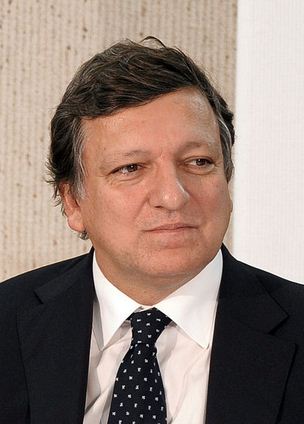
European Commission President José Manuel Barroso has said that “Europe needs the Netherlands and its innovative spirit”.

European Commission
President José
Manuel Barroso
Mr Barroso made his remark during the official opening of the House of Europe in The Hague, which was also attended by the Queen Beatrix, Prime Minister Mark Rutte and Deputy Chairman Stavros Lambrinidis of the European Parliament.

In his speech Mr Barroso praised the Dutch people for their openness, culture and their spirit of innovation across the centuries. He said these qualities were an asset to the European Union. He also pointed out that the Netherlands had always been strongly aware of the fact that cooperation makes it possible to survive in a changing world. Mr Barroso said that solidarity and a sense of responsibility are, and must remain, the guiding thoughts of the European Union.

Prime Minister Mark Rutte said that the opening of the House of Europe in The Hague meant the continent once again ‘has a roof over its head’. The extensively renovated building near the parliament building is home to the Representation of the European Commission and the information office of the European Parliament.

The prime minister emphasised the need for extensive reform in the EU in order for it to remain strong. Mr Rutte said this required decisiveness and courage. He added that he was glad a new approach was being put into effect in order to remove obstacles to a free and open market. Deputy Chairman Lambrinidis pointed out that if the 27 EU member states worked together no other world power would be able to rival Europe as an economic and political factor.

Related Article:

Sunday, May 15, 2011

ABI letter 'warned of shareholder challenge to corporate excess'

• Investor group targeted the chairmen of remuneration committees
• Executive pay on the rise again after period of restraint

guardian.co.uk, Jill Treanor, Sunday 15 May 2011


The ABI has expressed concern over plans to pay Bob Diamond 20%
more than his predecessor as chief executive of Barclays. Photograph: PA

Influential City investors have demanded that major companies block big pay rises to top bosses even if economic conditions improve.

The warning was made in a letter apparently sent to boardroom directors as shareholders detected a new trend for executives to demand pay rises after the period of restraint sparked by the 2008 banking crisis.

The Association of British Insurers (ABI) targeted the chairmen of the remuneration committees, the boardroom committees that set pay, and said that its members – which control about 15% of the stock market – had asked it to monitor the level of salary rises. For a senior boardroom executive, the salary is an important benchmark as bonuses are paid out as multiples of this.

The letter spells out that investors will "robustly challenge unjustified changes" in the size of individual pay deals.

In a key passage, the ABI said that its "members continue to believe it is the duty of remuneration committees to set executive salary levels commensurate with the roles undertaken, but to do so with due regard to company performance, with sensitivity to pay and conditions elsewhere in the business, and with awareness of wider economic circumstances".

The letter was sent at the beginning of major companies' annual general meeting season, in which there have been a number of protest votes against pay deals. Xstrata, the FTSE 100 mining company, suffered a rebellion against pay awards that were seen as excessive by Pirc, the corporate governance consultants. The directors of the bookmakers Ladbrokes and William Hill and Pace, the set-top box maker, faced similar challenges.

The ABI refused to elaborate when asked to confirm the authenticity of the letter, which notes the "restraint among many companies over the past few years in relation to executives' salaries".

"This restraint has been welcomed by investors in light of the challenging economic conditions," it said.

A rise in salary approaching 20% for Bob Diamond, the chief executive of Barclays bank, relative to his predecessor John Varley, has already been noted by the ABI.

António Horta-Osório, the new chief executive of the bailed-out Lloyds Banking Group, has two salaries – his actual £1m salary and a £1.2m "reference" salary used to determine the size of his bonuses.

Shareholders will be asked to vote on his pay deal – the subject of an "amber top" alert issued to investors by the ABI – at Wednesday's annual meeting.

One institutional investor said: "There was always a danger that pay freezes over the past few years would tempt firms to ratchet up pay at a later date. Shareholders will only accept pay increases if it matches true and sustained performance."


Related Articles:

RI, and seven other countries sign Nagoya Protocol

Antara News, May 15 2011

Related News

Jakarta (ANTARA News) - Indonesia, along with Guatemala, India, Japan, Norway, South Africa, Switzerland and Tunisia signed the Nagoya Protocol at the UN Headquarters in New York on May 11, marking a milestone in the history of the use of biodiversity convention.

(ANTARA/Dedhez Anggara)
The signing ceremony took place during a ministerial segment of the 19th session of the Commission on Sustainable Development (CSD-19) at the General Assembly Hall, the UN Headquarters, New York.

Thirteen countries - Colombia, Yemen, Algeria, Brazil, Mexico, Rwanda, Ecuador, Republic of Central Africa, Seychelles, Mali, Sudan, Panama and Peru - have already signed the protocol.

The protocol sets terms on how countries will permit access to genetic resources, share the benefits arising from their use, and cooperate with one another in allegations of misuse. The protocol will come into force 90 days after it has been ratified by at least 50 parties.

The protocol will serve as an important instrument to optimize the use of genetic resources and to put a halt to bio-piracy.

Indonesia is known as the world`s second mega biodiversity country.

On the occasion, Indonesian Environment Minister Gusti Mohammad Hatta speaking on behalf of ASEAN member states underscored the importance of the meeting to influence the outcome of UNCSD 2012 (Rio+20) in Brazil.

He also stressed the importance of applying the concept of green economy in support of sustainable development.

"With the Nagoya Protocol, biodiversity will serve as the backbone of sustainable development through the concept of green economy. Debates on the contradiction between the environment and economy will be over," he said.

After signing the protocol, Indonesia is expected to ratify it by enacting law in line with the effort to speed up the passage of genetic resource management bill into law.

The law is expected to strengthen the national legislation in the use of genetic resources for the benefit of the people particularly those having traditional wisdom and knowledge in managing genetic resources.

Editor: Priyambodo RH

Related Article:

Morocco extradites Ponzi scheme creator to Russia

RT.com, May 15, 2011

Morocco is extraditing the creator of a large financial pyramid to Russia after he managed to escape extradition from Italy.

Aleksey Kalinichenko is accused of defrauding some 4,000 people of more than US$35.5 million. He is involved in 119 criminal cases on charges of fraud.

The financial scheme affected investors from Russia, Belarus, Ukraine, Germany, Israel and Kazakhstan.

The creator of the Ponzi scheme promised his investors a return of 250 per cent.

Russian investigators issued an international arrest warrant in 2007. He was then detained in Italy, but managed to escape and fled to Morocco.

European Central Bank chief: 'There is no euro crisis'

Deutsche Welle,  15.05.2011 

Trichet dismissed all fears of a
eurozone collapse
Writing in Germany's Bild am Sonntag newspaper, European Central Bank chief Jean-Claude Trichet defended the success of the euro against mounting fears that the ongoing debt crisis will lead to the currency's collapse.

In a newspaper interview on Sunday, European Central Bank head Jean-Claude Trichet rejected fears that the European common currency, the euro, was on the brink of crumbling.

"There is no euro crisis. What we are currently observing in some eurozone countries is primarily a debt crisis in public budgets," Trichet wrote in the mass-circulation Bild am Sonntag.

His comments appeared alongside a report that an increasing amount of Germans - now 58 percent of the population - mistrust the euro, according to surveys by the Emnid polling firm.

Trichet justified his comments by saying the currency had achieved its purpose in the 12 years since it was introduced by keeping average eurozone inflation below 2 percent annually.

"We have maintained the euro's purchasing power," the ECB chief wrote, highlighting Germany's average 1.5 percent inflation rate since 1999.

"This is the best result over such a period of time in the past 50 years," he added.

Greece on the agenda Monday

The report said Emnid's survey also indicated that just under 50 percent of Germans supported an increase in EU aid for troubled Greece, whose high debt is one of the main problems facing the eurozone.

European finance ministers are set to convene on Monday to go over the details of a second Greek bailout and to vote through a 78-billion-euro EU/IMF rescue package for Portugal, despite the likely absence of IMF head Dominique Strauss-Kahn, who was arrested in New York on Sunday on sexual assault charges.

The ministers are also set to recommend Italian central bank governor Mario Draghi as Trichet's successor at the Tuesday meeting, as the latter's 8-year-term as ECB head comes to an end this autumn.

Author: Gabriel Borrud (AFP, dpa)
Editor: Kyle James

Germany willing to pump billions into electric car industry

Deutsche Welle, 15.05.2011

Merkel, left, is excited about the
prospect of e-cars
Germany plans to become a leading producer and consumer of electric cars in the near future. But critics accuse Berlin of using environmental concerns as an excuse to engage in anti-competitive practices.

In her weekly podcast on Saturday, May 14, German Chancellor Angela Merkel said that it was Germany's intention to become a leader in the emerging electric car industry, both in terms of production and consumption.

She said that one million "e-cars" would be cruising silently on German streets by 2020, to be followed by another five million come 2030.

"I am very confident that Germany can very quickly make up the terrain it has lost so far," the chancellor said, in a reference to the fierce competition that Germany will face from car manufacturers in emerging countries, "above all in Asia."

Merkel's plan recalls the 2008 'cash
for clunkers' scheme
Merkel's lofty plan, however, won't come without a hefty price for the German government. The Welt am Sonntag newspaper reported that Merkel's government was willing to shell out multi-billion euro investments over the next decade to advance "fundamental research" in technologies required for electric car production.

In addition, the report said Berlin was considering a series of measures to increase demand among German consumers for electric cars, including significant tax breaks for e-car owners.

Germany's Green party - an increasingly relevant force in the country's political landscape - even called for a buyer's premium to entice consumers. Renate Künast, the party's parliamentary head, told the Berlin-based Tagesspiegel newspaper that e-car buyers in Germany should receive 5,000 euros from the government for their purchase.

Electric cars, according to Künast, represent a principal means towards "modern and environmentally conscious mobility."

Battery problems

Even top batteries can only provide
for 200-km trips
The government's plans, however, face a number of hurdles and have been strongly criticized by leading figures.

Though most car manufacturers currently produce some form of electric model, there are still no e-cars capable of being mass-produced. At present, e-cars are limited to distances of between 100 and 200 kilometers (60 and 120 miles) before their batteries must be charged.

The next problem lies in the batteries themselves. Most take up to 10 hours to charge, and after each charging the capacity is depleted, so much so that most batteries have to be replaced every three years. And then there is the price: the going rate is between 600-800 euros per kilowatt-hour of storage capacity.

Camouflaged subsidies

Wolfgang Franz, chairman of the German Council of Economic Experts, told the Die Welt newspaper on Sunday that Berlin's subsidy plans represented a "distortion of competition" in an industry with, at best, an "uncertain future."

Much innovation is still required for
electric car motors
What's more, a host of environmental groups - including Greenpeace, BUND (Friends of the Earth Germany), and NABU (Nature and Biodiversity Conservation Union) - have expressed doubts as to the impact of electric cars on the environment, viewing Merkel's plans as nothing more than a willingness to inject further government funds into the automobile industry.

"The government's subsidy concept is nonsense," said Wolfgang Lobeck of Greenpeace. "E-cars themselves of course do not pollute the environment, but the production of the electricity on which they run, in the end, causes just as much greenhouse gas emissions as gasoline-powered cars."

The president of the German Association of the Automobile Industry (VDA), Matthias Wissmann, retorted such criticism by saying Germany currently invested much less in the electric car industry than countries such as the US or France.

"Nobody is asking for subsidies that will last forever," Wissmann told Die Welt. "We are talking about funds that will enable foundational research, for the development of modern operations and the necessary training of employees for this pilot project."

Author: Gabriel Borrud (Reuters, dpa)
Editor: Toma Tasovac

Saturday, May 14, 2011

IMF head arrested in New York

Reuters, NEW YORK | Sat May 14, 2011

International Monetary Fund (IMF) Managing
Director Dominique Strauss-Kahn pauses at a
news conference during the spring IMF-World
Bank meetings in Washington April 16, 2011.
(
Credit: Reuters/Yuri Gripas)
(Reuters) - The head of the International Monetary Fund, Dominique Strauss-Kahn, was arrested in New York on Saturday and accused of a sexual attack on a hotel maid, The New York Times reported.

The newspaper, citing a Port Authority spokesman, said Strauss-Kahn, also a possible Socialist candidate in next April's French presidential election, was arrested minutes before he was to due to fly to Paris from John F. Kennedy International Airport in New York.

The Times quoted authorities as saying Strauss-Kahn was accused of a "sex attack" on a maid at a Times Square hotel earlier in the day.


Related Articles:

Belarus opposition leader Andrei Sannikov jailed

BBC News, 14 May 2011

Related Stories

A high-profile opposition leader in Belarus has been jailed for five years on charges of organising mass protests after last year's presidential poll.

Sannikov was one of seven leaders
arrested in December
Andrei Sannikov, a former deputy foreign minister and co-founder of the Charter 97 group, had pleaded innocent.

Sannikov, 57, was one of seven presidential candidates detained at a rally in December after Alexander Lukashenko won a fourth term.

The EU and US condemned the crackdown and imposed sanctions on Mr Lukashenko.

He has been president of the former Soviet republic since 1994.

Sannikov was accused of organising "mass disturbances" by calling on people to take part in a protest march on 19 December and then leading it. Hundreds of opposition activists were detained at the demonstration.

The opposition said Mr Lukashenko's re-election with nearly 80% of the vote was fraudulent. Western monitors described the poll as "flawed".

Sannikov won most votes among the nine opposition candidates, taking 2.43%.


Related Articles:

Wednesday, May 11, 2011

Bernanke says big banks need tighter rules

Reuters, Washington, Wed May 11, 2011

(Reuters) - Larger financial firms should face more onerous regulatory requirements to make sure they can withstand turbulence in economy or credit markets, Federal Reserve Chairman Ben Bernanke will say on Thursday.

In copy of his Congressional testimony obtained by Reuters on Wednesday, Bernanke said the U.S. central bank was aiming to keep international standards as consistent as possible to ensure that no big firms fall through the cracks and guarantee a level playing field.

"Federal Reserve is developing more-stringent prudential standards for large banking organizations and nonbank financial firms" designated by a council of top regulators, Bernanke said in prepared remarks that did not directly touch upon the economy or monetary policy.

(Reporting by Dave Clark; Writing by Pedro Nicolaci da Costa; Editing by Diane Craft)


Related Articles:

Goldman lobbying hard to weaken Volcker rule

CEO of Goldman Sachs Lloyd C. Blankfein listens to U.S. President Barack Obama
speak at the annual meeting of the Business Council at the Park Hyatt Hotel
in Washington, May 4, 2010. (
Credit: Reuters/Larry Downing)


Deadly earthquake rocks Lorca in southern Spain

BBC News, 11 May 2011

A magnitude 5.3 earthquake has toppled several buildings in southern Spain, near the town of Lorca, killing at least four people, officials say.

The quake struck at a depth of just 1km (0.6 miles), some 120km south-west of Alicante, at 1850 (1650 GMT), the US Geological Survey reported.

TV shots showed rescue workers rushing through debris-littered streets.

Lorca Mayor Francisco Jodar told local radio the four deaths were caused by falling debris and cave-ins.

Old buildings, including a clocktower, were badly damaged by the quake, which followed a smaller 4.4-magnitude quake about two hours earlier.

Spain's Prime Minister Jose Luis Rodriguez Zapatero has deployed emergency military units to the scene, the Spanish EFE news agency reported.

Earthquakes are common in southern Spain, but they rarely result in casualties.

A number of aftershocks have been felt in the Murcia region, where authorities fear the death toll could rise.

The area worst hit by Tuesday's quake suffered previous tremors in 2005 and 1999.


Relation Articles:

Germany closes 'Dutch' stem cell clinic

RNW, 11 May 2011

The German authorities have closed down a controversial stem cell clinic operated by Dutch pharmacologist Kees Kleinbloesem. The XCell-Center became the subject of controversy when a Rumanian baby which had stem cells injected into his brain died last year.

The Public Prosecutor’s Office launched an investigation into the doctor who carried out the operation. Another patient – a ten-year-old boy from Azerbaijan - developed serious complications after undergoing the same treatment. The child was left more seriously disabled than before.

The XCell-Center, which has offices in Cologne and Düsseldorf, was an initiative of Mr Kleinbloesem. The German newspaper Wirtschafts Woche says the clinic’s shareholders sacked the Dutch pharmacologist at the end of April.

Related Articles:

Stem cell transplants rejected in surprise setback for new therapies

Crab Nebula's gamma-ray flare mystifies astronomers

"The Quantum Factor" – Apr 10, 2011 (Kryon channeled by Lee Carroll) (Subjects:Galaxies, Universe, Intelligent design, Benevolent design, Aliens, Nikola Tesla (Quantum energy), Inter-Planetary Travel, DNA, Genes, Stem Cells, Cells, Rejuvenation, Shift of Human Consciousness, Spontaneous Remission, Religion, Dictators, Africa, China, Nuclear Power, Sustainable Development, Animals, Global Unity.. etc.)
- New


Germany not to extradite Dutch former SS man

RNW, 11 May 2011

Germany is not going to extradite Dutch war criminal Klaas-Carel Faber to the Netherlands. The justice authorities in the federal state of Bavaria announced the decision on Wednesday.

Dutch war criminal Klaas-Carel Faber
After exhaustive investigations, the authorities in Ingolstadt where the 89-year-old lives have confirmed he is indeed a German citizen. Germany does not extradite its own nationals.

Faber was a member of the firing squad in Westerbork Transit Camp, in the Waffen-SS and in the ‘Sonderkommando Feldmeijer’, a special unit which assassinated members of the Dutch resistance.

In 1947, a Dutch court sentenced him to death for the killing of at least 11 people at Westerbork and for aiding the enemy in wartime. A year later, the sentence was commuted to life. He escaped from prison in Breda in the Netherlands in 1952 and fled to what was then West Germany.

Nuclear commission pinpoints 2021 for German atomic shutdown

Deutsche Welle, May 11, 2011

Germany's nuclear reactors may
soon be a thing of the past
A draft report from Germany's ethics commission on nuclear power says the country could and should close down all its nuclear power stations by 2021. And it says this date could even be moved forward by some time.

The 22-strong ethics commission set up by Chancellor Angela Merkel to debate the pros and cons of nuclear energy in Germany seems likely to recommend that all nuclear power stations in the country be taken from the grid within the next decade - at the latest.

According to the daily Frankfurter Allgemeine Zeitung and the news magazine Spiegel Online, a draft report from the commission says ditching nuclear power is necessary to rule out the risks it entails.

It says that the departure from nuclear energy does not, however, mean abandoning carbon-dioxide reduction goals or suffering "energy poverty."

'Enormous chance'

In fact, the authors of the report emphasize that dispensing with nuclear energy could "drive growth" and offers "enormous technological, economic and social chances to raise Germany's profile as an exporting nation with regard to sustainable products and services."

The report says Germany can show that functioning without nuclear energy is "the chance for a high-performance economy."

'Poisoned social atmosphere'

The report also draws attention to the fact that the use of nuclear power has led to a "poisoning of the social atmosphere." Just over half of Germans oppose nuclear power, according to recent surveys.

The paper says the seven oldest nuclear plants, which have already been shut down for tests, should remain so, noting that the power they provided has been easily replaced. It says the rest can be gradually taken from the grid, with renewable energy sources taking over.

The nuclear disaster in Fukushima
triggered fresh debate on atomic power
It recommends the use of new, more-efficient coal-fired plants, and also calls on Germany to establish energy reserves sufficient for half a year using hydrogen and methane as storage media. It also envisages increased use of wind and solar power.

Saving energy 'urgent'

At the same time, it warns, it is urgently necessary to reduce energy use, claiming that savings of 40-60 percent are possible. It also criticizes the fact that subsidies for energy-saving measures have been cut.

The authors also recommend that existing atomic waste should not be permanently buried, but stored in a way that enables it to be retrieved. This would allow more time to find ways of disposing of the waste safely and for good.

Decision imminent

The commission, headed by former Environment Minister Klaus Töpfer (CDU) and the president of the German Research Foundation (DFG), Matthias Kleiner, was set up in response to the reactor catastrophe in Fukushima in Japan. Its final report is to be presented to the government on May 28.

Another report from the German commission for reactor safety, containing the results from a safety examination of the country's 17 nuclear reactors, is due in mid-May

The government is then to use the two reports as a basis for deciding on a deadline for Germany's turning its back on nuclear power. This would be voted on by the two chambers of parliament by June 8.

Author: Timothy Jones (dpa)
Editor: Nancy Isenson
Related Articles: